
UNITED STATES
SECURITIES AND EXCHANGE COMMISSION
Washington, D.C. 20549
FORM
CURRENT REPORT
Pursuant to Section 13 or 15(d) of the Securities Exchange Act of 1934
Date of Report (Date of earliest event reported):
(Exact name of registrant as specified in its charter)
| (State or other jurisdiction of incorporation) |
(Commission File Number) | (IRS Employer Identification Number) |
| (Address of principal executive offices) | (Zip Code) |
Registrant’s telephone number, including
area code: (
N/A
(Former name or former address, if changed since last report)
Check the appropriate box below if the Form 8-K filing is intended to simultaneously satisfy the filing obligation of the registrant under any of the following provisions:
| Written communications pursuant to Rule 425 under the Securities Act (17 CFR 230.425) |
| Soliciting material pursuant to Rule 14a-12 under the Exchange Act (17 CFR 240.14a-12) |
| Pre-commencement communications pursuant to Rule 14d-2(b) under the Exchange Act (17 CFR 240.14d-2(b)) |
| Pre-commencement communications pursuant to Rule 13e-4(c) under the Exchange Act (17 CFR 240.13e-4(c)) |
Securities registered pursuant to Section 12(b) of the Act:
| Title of Each Class | Trading Symbol | Name of Each Exchange on Which Registered | ||
| The |
Indicate by check mark whether the registrant is an emerging growth company as defined in Rule 405 of the Securities Act of 1933 (§230.405 of this chapter) or Rule 12b-2 of the Securities Exchange Act of 1934 (§240.12b-2 of this chapter).
Emerging growth company
If an emerging growth company, indicate by check
mark if the registrant has elected not to use the extended transition period for complying with any new or revised financial accounting
standards provided pursuant to Section 13(a) of the Exchange Act.
Item 7.01 Regulation FD Disclosure.
On July 7, 2026, Turn Therapeutics Inc. issued a press release (the “Press Release”). A copy of the Press Release is furnished as Exhibit 99.1 to this Current Report on Form 8-K.
On July 7, 2026, Turn Therapeutics Inc. released an updated investor presentation (the “Investor Presentation”). A copy of the Investor Presentation is furnished as Exhibit 99.2 to this Current Report on Form 8-K.
The information in Item 7.01 of this Current Report on Form 8-K, including the Press Release furnished as Exhibit 99.1, and the Investor Presentation furnished as Exhibit 99.2 hereto shall not be deemed “filed” for purposes of Section 18 of the Securities Exchange Act of 1934, as amended (the “Exchange Act”), or otherwise subject to the liabilities of that section, nor shall they be deemed incorporated by reference in any filing under the Securities Act of 1933, as amended, or the Exchange Act, except as expressly set forth by specific reference in such a filing.
Item 9.01 Financial Statements and Exhibits.
(d) Exhibits
| Exhibit No. | Description | |
| 99.1 | Press Release, dated July 7. 2026 | |
| 99.2 | Investor Presentation, dated July 7, 2026 | |
| 104 | Cover Page Interactive Data File (embedded within the Inline XBRL document) |
1
SIGNATURES
Pursuant to the requirements of the Securities Exchange Act of 1934, the registrant has duly caused this report to be signed on its behalf by the undersigned hereunto duly authorized.
| TURN THERAPEUTICS INC. | ||
| Date: July 7, 2026 | ||
| By: | /s/ Bradley Burnam | |
| Name: | Bradley Burnam | |
| Title: | Chief Executive Officer | |
2
Exhibit 99.1

Turn Therapeutics Announces Final Stage 2 Design and Data-Driven Expansion of GX-03 Phase 2 Program in Atopic Dermatitis
Clinically meaningful efficacy observed across a broader spectrum of atopic dermatitis supports expansion of the ongoing Phase 2 program to prospectively evaluate patients across the full range of disease severity as defined by the Eczema Area and Severity Index (EASI)
Comprehensive interim review identifies optimal patient population, endpoint strategy, disease stratification, and statistical methodology for final Stage 2 design of the Company's ongoing adaptive Phase 2 trial in atopic dermatitis
Final Stage 2 design will employ the FDA-recognized Hochberg multiple testing procedure, allowing statistical significance to be established across multiple efficacy endpoints rather than a single primary endpoint
Company to host investor webcast today at 4:30 p.m. Eastern Time
WESTLAKE VILLAGE, Calif., July 7, 2026 — Turn Therapeutics, Inc. (NASDAQ: TTRX), a clinical-stage biotechnology company developing targeted, non-systemic therapies for inflammatory skin diseases, today announced the completion of a comprehensive interim analysis of its ongoing adaptive Phase 2 clinical trial evaluating GX-03 for the treatment of atopic dermatitis.
The multi-week review resulted in the final Stage 2 study design, incorporating data-driven refinements to patient selection, disease stratification, endpoint evaluation, and statistical methodology. Importantly, the review identified clinically meaningful efficacy across a broader spectrum of atopic dermatitis severity than originally anticipated, enabling expansion of the ongoing Phase 2 program to prospectively evaluate patients across the full spectrum of baseline disease severity as measured by the Eczema Area and Severity Index (EASI).
Following the Company's previously disclosed preliminary interim review of the first 50 completed subjects and under the oversight of the Independent Data Monitoring Committee, Turn Therapeutics initiated a comprehensive planned interim analysis led by Bruce Stouch, Ph.D., the study's lead biostatistician, together with Dr. Stephen Hahn, Executive Clinical and Regulatory Lead for Turn Therapeutics and former Commissioner of the U.S. Food and Drug Administration. The multi-week review comprehensively evaluated treatment-response patterns, baseline disease characteristics, efficacy across prespecified and exploratory endpoints, and clinically relevant patient characteristics to maximize the scientific value of the Stage 1 dataset and optimize the final Stage 2 study design, which is intended to serve as the primary efficacy phase supporting future regulatory development. Enrollment continued uninterrupted throughout the review under the adaptive trial design, and all patients enrolled during this period remain blinded and will be prospectively evaluated under the final Stage 2 study design.
“The purpose of a staged, adaptive clinical trial is to learn from the first stage to strengthen the second,” said Bradley Burnam, Chief Executive Officer of Turn Therapeutics. “GX-03 demonstrated meaningful activity across a wider spectrum of atopic dermatitis severity than we originally anticipated. We believe the optimized Stage 2 design strengthens the current study while generating data that could support broader development and future labeling opportunities for GX-03.”
The comprehensive interim review confirmed preliminary observations that Week 4 provided the earliest and clearest treatment separation between GX-03 and vehicle, supporting inclusion of Week 4 efficacy endpoints in the final Stage 2 design and highlighting the potential for a rapidly acting topical therapy across the atopic dermatitis severity spectrum. The analyses also identified baseline pruritus severity as a potential biomarker of treatment response, supporting prospective enrichment of the Stage 2 population. In addition, GX-03 demonstrated clinically meaningful efficacy in patients with baseline Eczema Area and Severity Index (EASI) scores of 1.1 to 7.0, a population generally considered to have mild-to-moderate disease according to the EASI scale, expanding the range of disease severity prospectively evaluated in Stage 2 beyond what was originally anticipated. Collectively, these findings supported a final Stage 2 design evaluating one unified patient population across the full baseline EASI spectrum using multiple efficacy endpoints.
Expansion of the Ongoing Phase 2 Program
One of the most significant findings from the comprehensive interim review was the identification of treatment activity in patients with baseline EASI scores of 1.1 to 7.0. While all Stage 1 participants had moderate-to-severe lesions according to the Investigator's Global Assessment (IGA), enrollment included patients across a broad range of baseline EASI scores, reflecting a wide spectrum of total inflammatory burden. The observed efficacy in patients with EASI scores of 1.1 to 7.0 identified a potential treatment opportunity in the EASI-defined mild-to-moderate atopic dermatitis population, which is commonly managed with topical therapies. Within this subgroup, GX-03 demonstrated improvements in Week 4 vIGA-AD Success together with complete disease clearance at both Week 4 and Week 8 compared with vehicle. Based on these findings, the final Stage 2 design continues to evaluate patients with greater inflammatory burden while prospectively expanding enrollment to include patients across the full baseline EASI spectrum (EASI ≥1.1).
EASI 1.1-7.0 Subgroup from Interim Analysis
| Endpoint | GX-03 (n=14) | Vehicle (n=18) | Treatment Difference | |||||||||
| Week 4 vIGA-AD Success | 71.4% (10/14 | ) | 33.3% (6/18 | ) | +38.1 | % | ||||||
| Week 4 EASI-100 | 28.6% (4/14 | ) | 5.6% (1/18 | ) | +23.0 | % | ||||||
| Week 8 EASI-100 | 35.7% (5/14 | ) | 11.1% (2/18 | ) | +24.6 | % | ||||||
Completed interim analysis patients with EASI = 1.1 – 7.0 demonstrated treatment responses during Stage 1
2
Final Stage 2 Study Design
The final Stage 2 population will include approximately 120-135 patients prospectively enrolled across the full baseline Eczema Area and Severity Index (EASI) spectrum (EASI 1.1-7.0, 7.1-15.9 and ≥16). Subjects will be stratified by baseline EASI category, with 1:1 randomization maintained within each stratum. The study will evaluate four prespecified efficacy endpoints representing progressively deeper levels of clinical response using the FDA-recognized Hochberg multiple testing procedure, which preserves rigorous control of Type I error while allowing statistical significance to be established across multiple clinically meaningful efficacy endpoints rather than a single primary endpoint.
Key Elements of the Final Stage 2 Design
● Approximately 120-135 patients, including those enrolled since the interim analysis, prospectively stratified into three baseline EASI severity groups (1.1-7.0, 7.1-15.9 and ≥16), with 1:1 randomization maintained within each stratum. Every enrolled patient will contribute to a single, unified efficacy analysis that prospectively evaluates GX-03 across a broader spectrum of atopic dermatitis than originally anticipated.
● Prospective evaluation of four prespecified efficacy endpoints using the Hochberg multiple testing procedure:
○ Week 4 vIGA-AD Success
○ Week 4 EASI-75
○ Week 8 EASI-90
○ Week 8 EASI-100
● Continued uninterrupted enrollment throughout the comprehensive interim review, with patients enrolled during this period remaining blinded and incorporated directly into the final Stage 2 efficacy population.
Interim Analysis Subgroup Representative of Final Stage 2 Design
| Endpoint | GX-03 (n=13) | Vehicle (n=12) | Treatment Difference | |||||||||
| Week 4 vIGA-AD Success | 61.5% (8/13 | ) | 8.3% (1/12 | ) | +53.2 | % | ||||||
| Week 4 EASI-75 | 69.2% (9/13 | ) | 25.0% (3/12 | ) | +44.2 | % | ||||||
| Week 8 EASI-90 | 53.8% (7/13 | ) | 16.7% (2/12 | ) | +37.1 | % | ||||||
| Week 8 EASI-100 | 46.2% (6/13 | ) | 8.3% (1/12 | ) | +37.9 | % | ||||||
Completed interim analysis patients representative of the final Stage 2 design criteria (EASI ≥ 1.1 and PP-NRS ≥ 7) demonstrated treatment responses during Stage 1, providing the scientific rationale for the optimized enrollment strategy
3
The figure above illustrates the scientific basis for the Stage 2 study design. Applying the final Stage 2 enrollment criteria to the completed interim analysis population demonstrated notable statistical separation from vehicle across all four prespecified efficacy endpoints.
Consistent with previous reports, no treatment-related serious adverse events have been observed in either treatment group, and no treatment-related tolerability issues or study discontinuations have been reported. GX-03 continues to demonstrate a favorable safety and tolerability profile. Enrollment has continued uninterrupted throughout the comprehensive interim review, and all patients enrolled during this period remain blinded and will be incorporated into the final Stage 2 analyses. Enrollment will continue under the final Stage 2 protocol, and Turn Therapeutics anticipates completing enrollment during the fourth quarter of 2026. The Company remains sufficiently capitalized to support completion of the study and planned operations through the third quarter of 2027.
Conference Call
Turn Therapeutics will host a webcast today, July 7, at 4:30 p.m. Eastern Time to discuss the comprehensive interim analysis, expansion of the ongoing Phase 2 program, and the detailed Stage 2 study design for GX-03.
Bradley Burnam, Chief Executive Officer, and Dr. Stephen Hahn, Executive Clinical and Regulatory Lead, will present.
To access the live webcast, please register at https://edge.media-server.com/mmc/p/jix773zk. A replay of the webcast, along with accompanying presentation materials, will be available in the Investor Relations section of the Company's website at https://ir.turntherapeutics.com following the conclusion of the call.
About Turn Therapeutics
Turn Therapeutics is a clinical-stage biotechnology company focused on developing targeted, localized therapies for inflammatory and infectious skin diseases. GX-03 is Turn Therapeutics' lead investigational topical candidate being developed as a targeted, non-systemic treatment for atopic dermatitis, designed to deliver biologic-level efficacy without the trade-offs of injectable administration or systemic immunosuppression.
Forward-Looking Statements
This press release contains forward-looking statements within the meaning of the Private Securities Litigation Reform Act of 1995. All statements, other than statements of historical fact, contained in this press release are forward-looking statements, including statements regarding clinical development plans, optimization of enrollment criteria and endpoints, interpretation of interim clinical observations, expected trial timing, regulatory interactions, and the therapeutic potential of GX-03. Forward-looking statements contained in this press release may be identified by the use of words such as “anticipate,” “believe,” “contemplate,” “could,” “estimate,” “expect,” “intend,” “seek,” “may,” “might,” “plan,” “potential,” “predict,” “project,” “suggest,” “target,” “aim,” “should,” “will,” “would,” or the negative of these words or other similar expressions, although not all forward-looking statements contain these words. Forward-looking statements are based on Turn’s current expectations and are subject to inherent uncertainties, risks, and assumptions that are difficult to predict, including risks related to the success of development programs, the availability of additional financing, and the Company’s ability to execute its strategic plan. Further, certain forward-looking statements are based on assumptions as to future events that may not prove to be accurate. For a further discussion of risks and uncertainties that could cause actual results to differ from those expressed in these forward-looking statements, as well as risks relating to the business of Turn Therapeutics in general, see the risk disclosures in the Company’s filings with the SEC. All such forward-looking statements speak only as of the date they are made, and Turn undertakes no obligation to update or revise these statements, whether as a result of new information, future events, or otherwise.
Investor Relations / Media Contact
Sasha Damouni
The Damouni Group
Sasha@damounigroup.com
4
Exhibit 99.2
GX-03: Phase 2, Stage 2 Overview & Additional Interim Analysis Insights Investor Webcast Presentation July 7, 2026
2 Disclaimers & Safe Harbour Except for historical information set forth herein, the matters set forth in this presentation contain forward-looking statements within the meaning of the safe harbor provisions of the U.S. Private Securities Litigation Reform Act of 1995. Forward-looking statements may be identified by words such as “may,” “might,” “will,” “should,” “expects,” “plans,” “anticipates,” “believes,” “estimates,” “predicts,” “potential” or “continue,” the negative of these terms and other comparable terminology. We cannot guarantee future results, level of activity, performance or achievements. Moreover, neither we nor any other person assumes responsibility for the accuracy and completeness of any of these forward-looking statements. We are under no duty to update any of these forward-looking statements after the date of this presentation to conform our prior statements to actual results or revised expectations. These statements are based upon the current beliefs and expectations of Turn Therapeutics’ management and are subject to significant risks and uncertainties. By their nature, forward-looking statements involve risks and uncertainties because they depend on circumstances that may or may not occur in the future. If underlying assumptions prove inaccurate or risks or uncertainties materialize, actual results may differ materially. Risks include: industry competition; economic factors; regulatory challenges; uncertainties in clinical development and obtaining regulatory approvals; no guarantees that pipeline products will prove commercially successful; reliance on third-party partnerships and manufacturers; dependence on patent protections for PermaFusion®; and ability to access adequate capital. Although these statements are based on assumptions we believe are reasonable, we caution that forward-looking statements are not guarantees of future performance and you should not place undue reliance on them. Turn Therapeutics undertakes no obligation to publicly update any forward-looking statement, whether as a result of new information, future events or otherwise. Additional factors can be found in the company’s SEC filings available at www.sec.gov. This presentation includes market and industry data and forecasts that the Company has derived from independent consultant reports, publicly available information, various industry publications, other published industry sources, and its internal data and estimates. Independent consultant reports, industry publications and other published industry sources generally indicate that the information contained therein was obtained from sources believed to be reliable. Although the Company believes that these third-party sources are reliable, it does not guarantee the accuracy or completeness of this information, and the Company has not independently verified this information. The Company’s internal data and estimates are based upon information obtained from trade and business organizations and other contacts in the markets in which the Company operates and management’s understanding of industry conditions. Although the Company believes that such information is reliable, it has not had this information verified by any independent sources. In addition, the information contained in this presentation is as of the date hereof (except where otherwise indicated), and the Company has no obligation to update such information, including in the event that such information becomes inaccurate or if estimates change. Subsequent materials may be provided by or on behalf of the Company in its discretion and such information may supplement, modify or supersede the information in these materials. Neither the Company, nor any of its respective affiliates, advisors or representatives shall have any liability whatsoever (in negligence or otherwise) for any loss or damage howsoever arising from any use of these materials or their contents or otherwise arising in connection with these materials. This presentation may contain trademarks, service marks, trade names and copyrights of other companies, which are the property of their respective owners. Solely for convenience, some of the trademarks, service marks, trade names and copyrights referred to in this presentation may be listed without the TM, SM or symbols, but the Company will assert, to the fullest extent under applicable law, the rights of the applicable owners, if any, to these trademarks, service marks, trade names and copyrights.

3 Bradley Burnam Chief Executive Officer
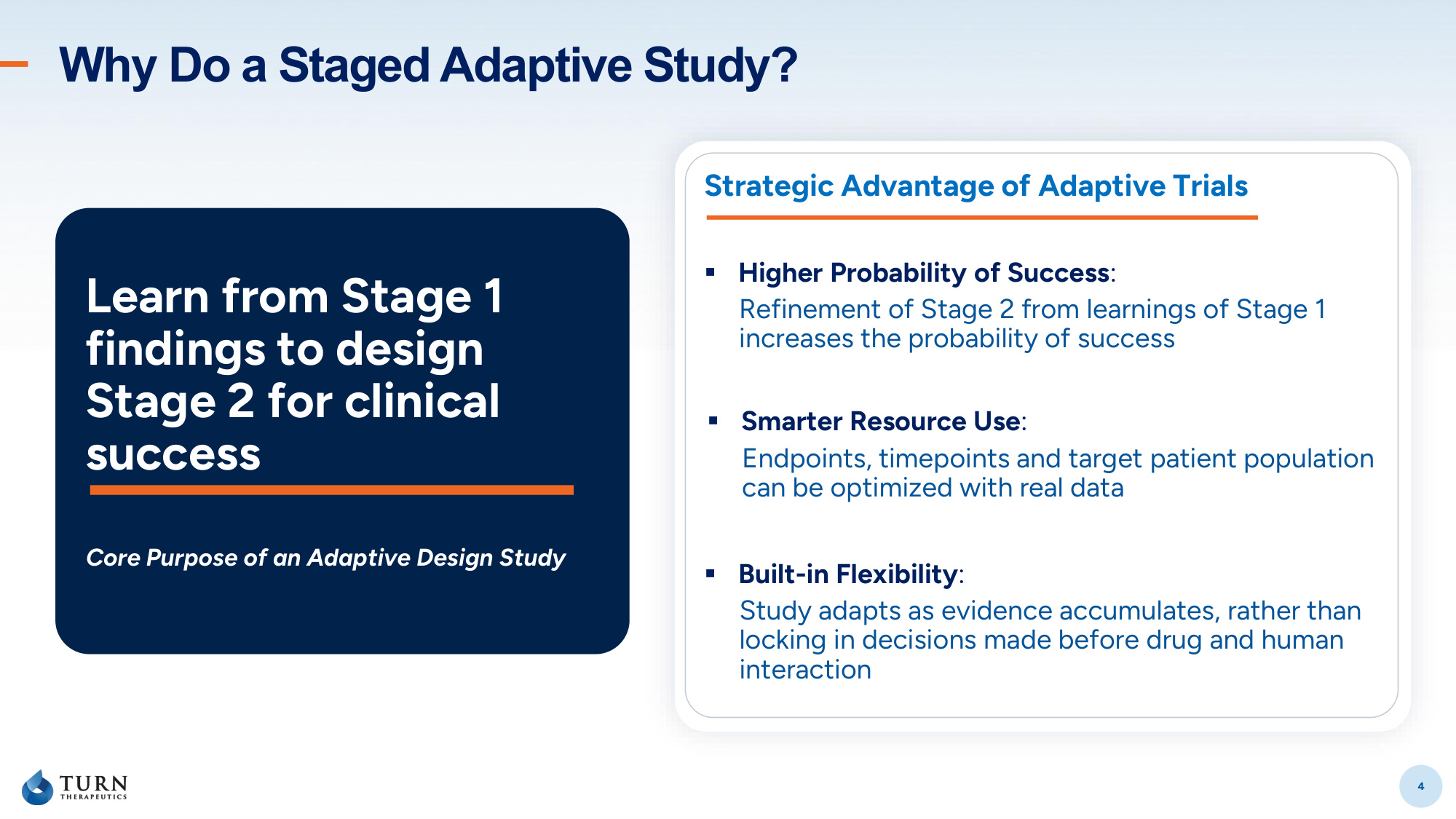
4 Why Do a Staged Adaptive Study? 4 Learn from Stage 1 findings to design Stage 2 for clinical success Core Purpose of an Adaptive Design Study Strategic Advantage of Adaptive Trials ▪Higher Probability of Success: Refinement of Stage 2 from learnings of Stage 1 increases the probability of success ▪Smarter Resource Use: Endpoints, timepoints and target patient population can be optimized with real data ▪Built-in Flexibility: Study adapts as evidence accumulates, rather than locking in decisions made before drug and human interaction
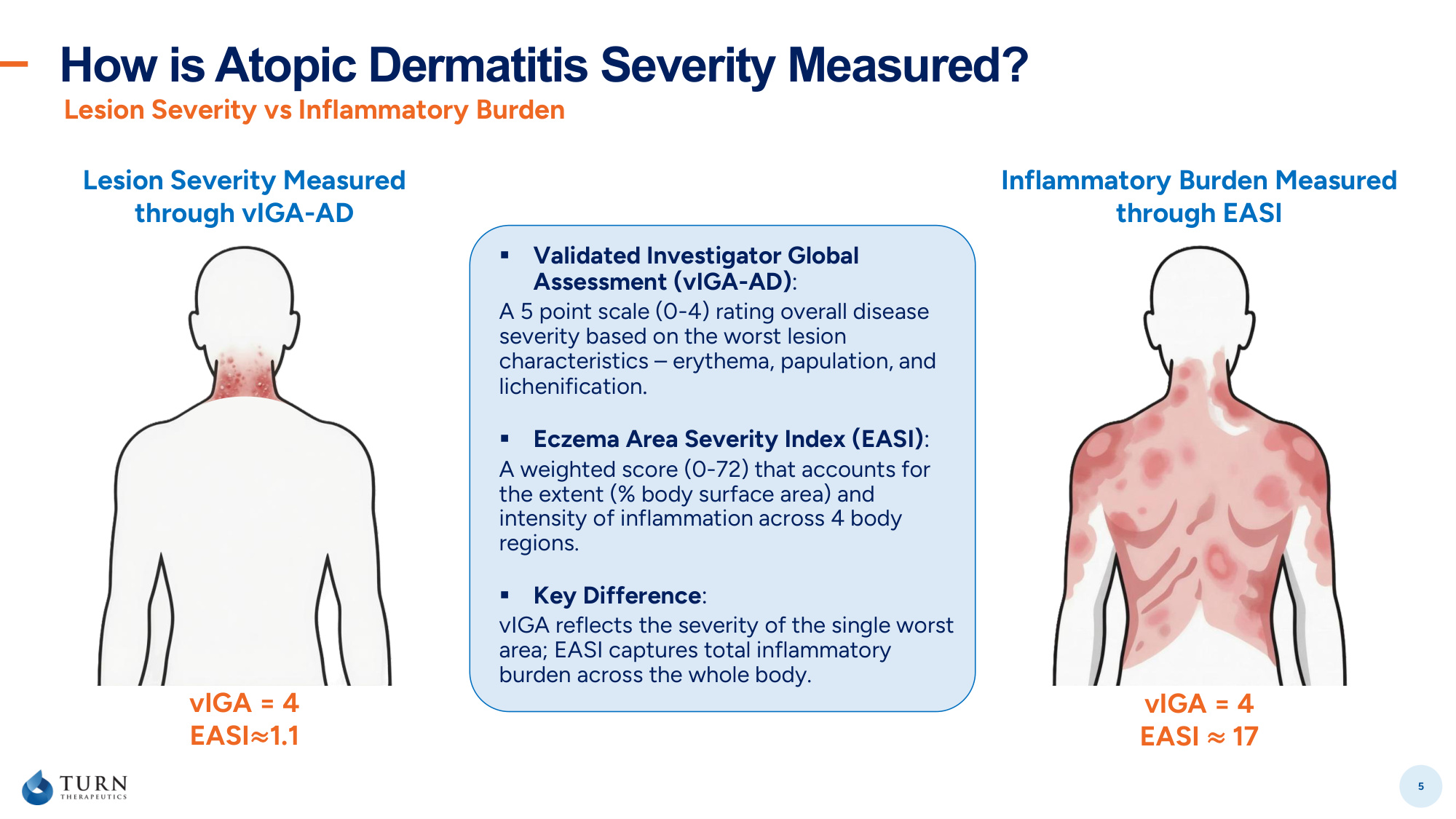
How is Atopic Dermatitis Severity Measured? 5 Lesion Severity vs Inflammatory Burden Lesion Severity Measured through vIGA-AD Inflammatory Burden Measured through EASI vIGA = 4 EASI≈1.1 vIGA = 4 EASI ≈ 17 ▪ Validated Investigator Global Assessment (vIGA-AD): A 5 point scale (0-4) rating overall disease severity based on the worst lesion characteristics – erythema, papulation, and lichenification. ▪ Eczema Area Severity Index (EASI): A weighted score (0-72) that accounts for the extent (% body surface area) and intensity of inflammation across 4 body regions. ▪ Key Difference: vIGA reflects the severity of the single worst area; EASI captures total inflammatory burden across the whole body.
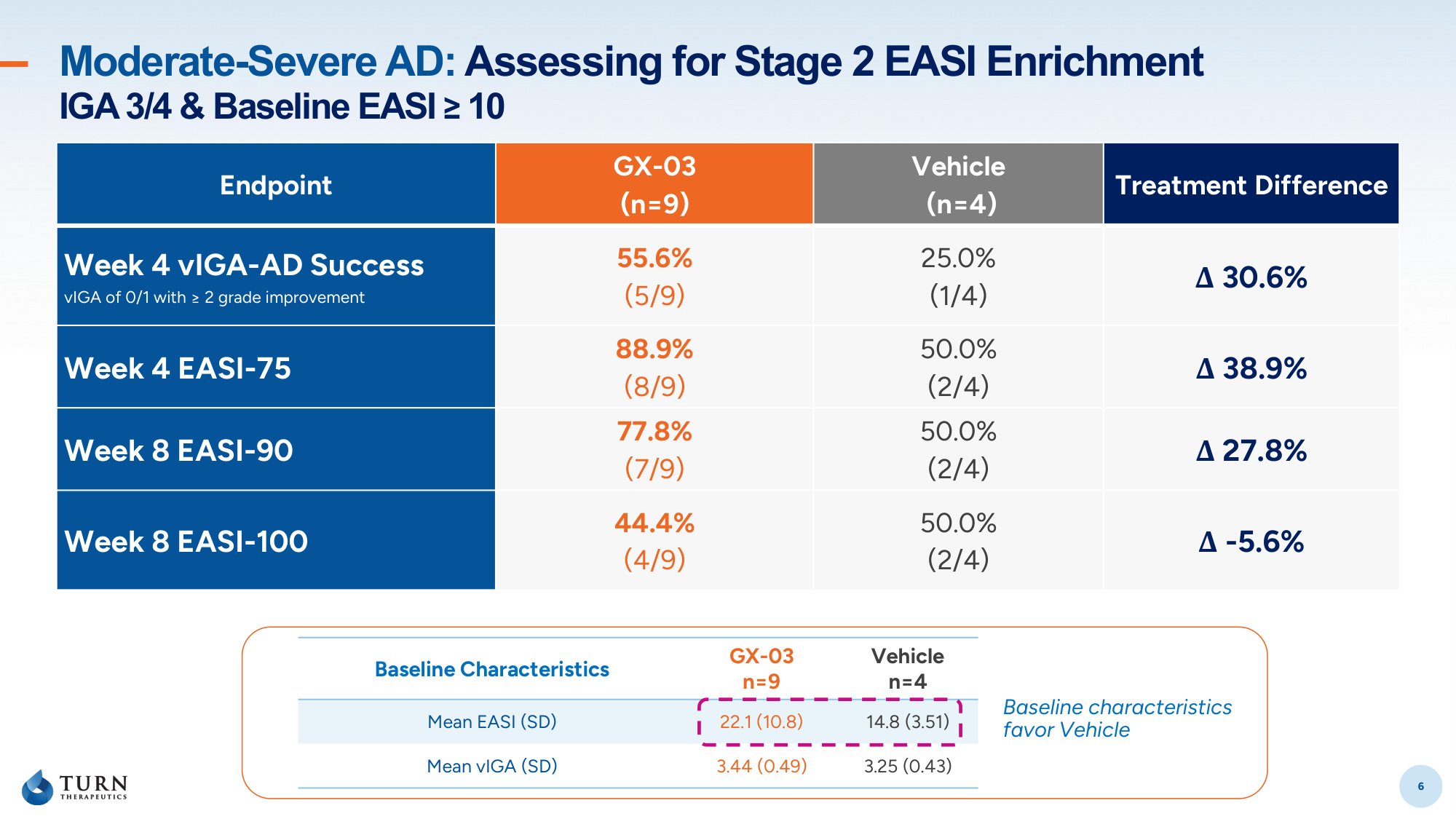
6 Moderate-Severe AD: Assessing for Stage 2 EASI Enrichment IGA 3/4 & Baseline EASI ≥ 10 6 Baseline Characteristics GX-03 n=9 Vehicle n=4 Mean EASI (SD) 22.1 (10.8) 14.8 (3.51) Mean vIGA (SD) 3.44 (0.49) 3.25 (0.43) Endpoint GX-03 (n=9) Vehicle (n=4) Treatment Difference Week 4 vIGA-AD Success vIGA of 0/1 with ≥ 2 grade improvement 55.6% (5/9) 25.0% (1/4) Δ 30.6% Week 4 EASI-75 88.9% (8/9) 50.0% (2/4) Δ 38.9% Week 8 EASI-90 77.8% (7/9) 50.0% (2/4) Δ 27.8% Week 8 EASI-100 44.4% (4/9) 50.0% (2/4) Δ -5.6% Baseline characteristics favor Vehicle
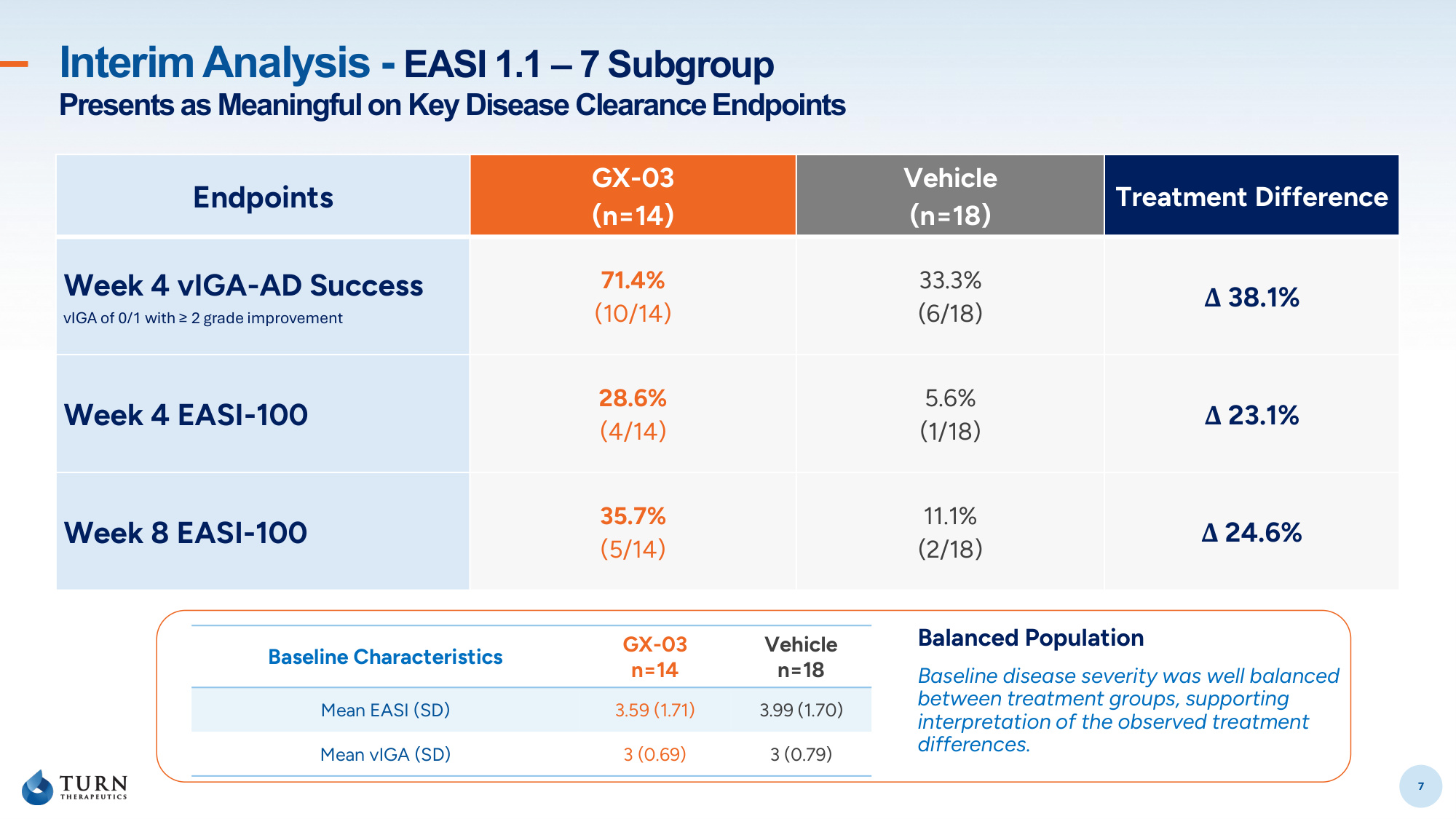
7 Interim Analysis - EASI 1.1 – 7 Subgroup Presents as Meaningful on Key Disease Clearance Endpoints 7 Endpoints GX-03 (n=14) Vehicle (n=18) Treatment Difference Week 4 vIGA-AD Success vIGA of 0/1 with ≥ 2 grade improvement 71.4% (10/14) 33.3% (6/18) Δ 38.1% Week 4 EASI-100 28.6% (4/14) 5.6% (1/18) Δ 23.1% Week 8 EASI-100 35.7% (5/14) 11.1% (2/18) Δ 24.6% Baseline Characteristics GX-03 n=14 Vehicle n=18 Mean EASI (SD) 3.59 (1.71) 3.99 (1.70) Mean vIGA (SD) 3 (0.69) 3 (0.79) Balanced Population Baseline disease severity was well balanced between treatment groups, supporting interpretation of the observed treatment differences.
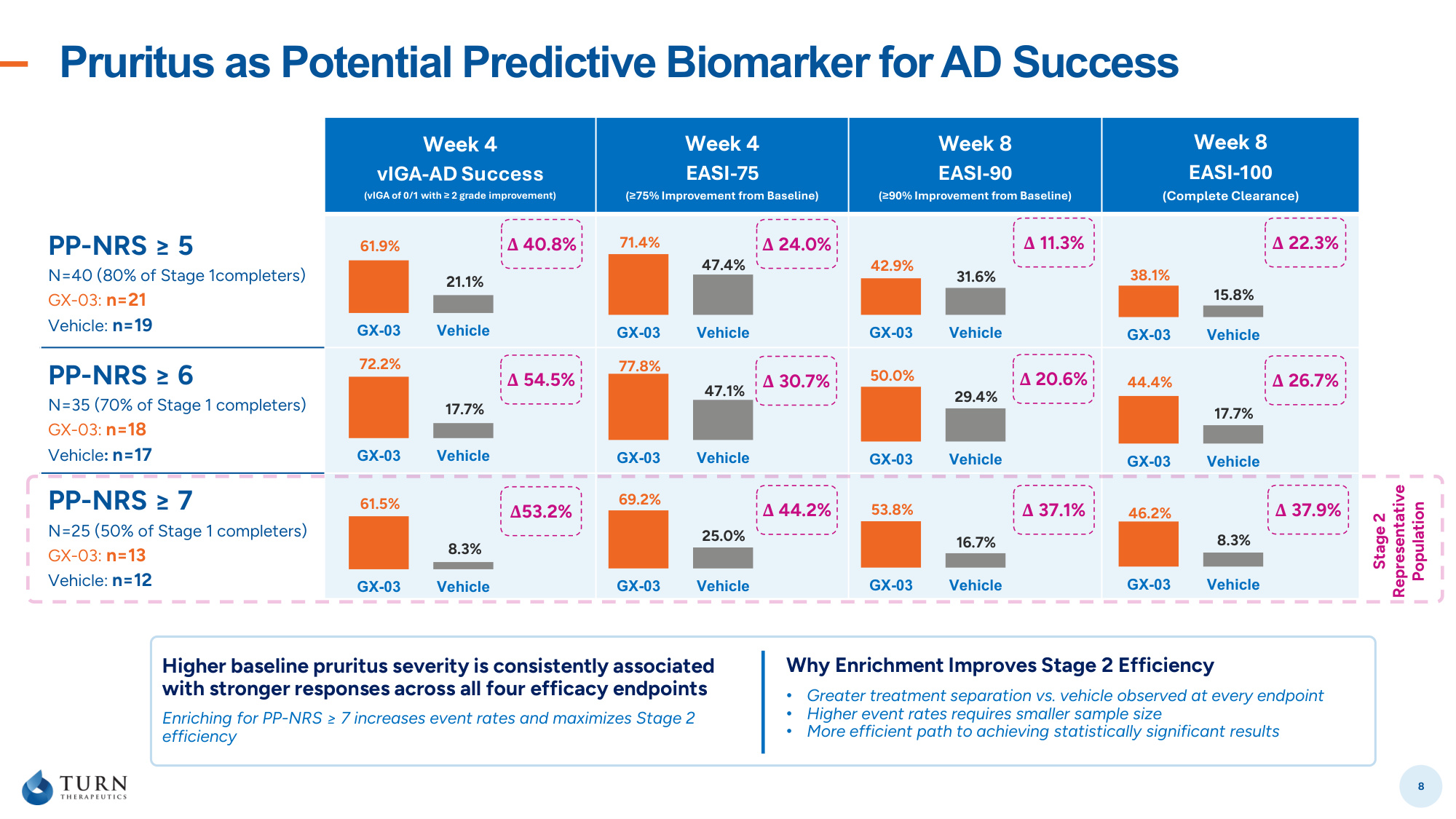
Pruritus as Potential Predictive Biomarker for AD Success 8 Week 4 vIGA-AD Success (vIGA of 0/1 with ≥ 2 grade improvement) Week 4 EASI-75 (≥75% Improvement from Baseline) Week 8 EASI-90 (≥90% Improvement from Baseline) Week 8 EASI-100 (Complete Clearance) PP-NRS ≥ 5 N=40 (80% of Stage 1completers) GX-03: n=21 Vehicle: n=19 PP-NRS ≥ 6 N=35 (70% of Stage 1 completers) GX-03: n=18 Vehicle: n=17 PP-NRS ≥ 7 N=25 (50% of Stage 1 completers) GX-03: n=13 Vehicle: n=12 GX-03 Vehicle Higher baseline pruritus severity is consistently associated with stronger responses across all four efficacy endpoints Enriching for PP-NRS ≥ 7 increases event rates and maximizes Stage 2 efficiency Why Enrichment Improves Stage 2 Efficiency • Greater treatment separation vs. vehicle observed at every endpoint • Higher event rates requires smaller sample size • More efficient path to achieving statistically significant results GX-03 Vehicle GX-03 Vehicle 61.9% 72.2% 61.5% 21.1% 17.7% 8.3% GX-03 Vehicle GX-03 Vehicle GX-03 Vehicle 71.4% 77.8% 69.2% 47.4% 47.1% 25.0% GX-03 Vehicle GX-03 Vehicle GX-03 Vehicle 42.9% 50.0% 53.8% 31.6% 29.4% 16.7% GX-03 Vehicle GX-03 Vehicle GX-03 Vehicle 38.1% 44.4% 46.2% 15.8% 17.7% 8.3% Stage 2 Representative Population Δ 40.8% Δ 54.5% Δ53.2% Δ 44.2% Δ 30.7% Δ 24.0% Δ 11.3% Δ 20.6% Δ 37.1% Δ 37.9% Δ 26.7% Δ 22.3%
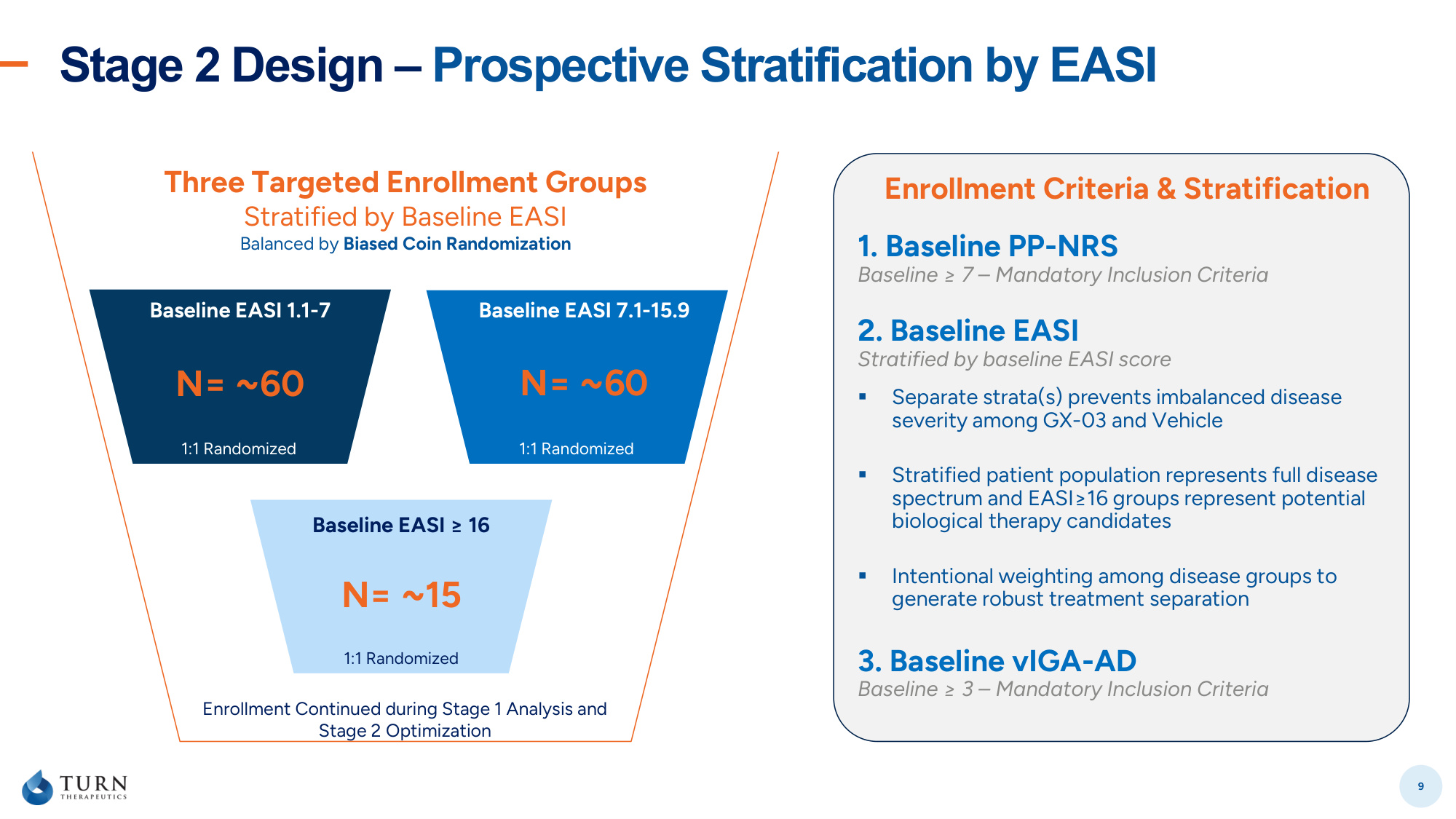
Stage 2 Design – Prospective Stratification by EASI 9 2. Baseline EASI Stratified by baseline EASI score ▪ Separate strata(s) prevents imbalanced disease severity among GX-03 and Vehicle ▪ Stratified patient population represents full disease spectrum and EASI≥16 groups represent potential biological therapy candidates ▪ Intentional weighting among disease groups to generate robust treatment separation 1. Baseline PP-NRS Baseline ≥ 7 – Mandatory Inclusion Criteria 3. Baseline vIGA-AD Baseline ≥ 3 – Mandatory Inclusion Criteria Enrollment Criteria & Stratification N= ~60 Baseline EASI 1.1-7 1:1 Randomized N= ~60 Baseline EASI 7.1-15.9 1:1 Randomized N= ~15 Baseline EASI ≥ 16 1:1 Randomized Three Targeted Enrollment Groups Stratified by Baseline EASI Balanced by Biased Coin Randomization Enrollment Continued during Stage 1 Analysis and Stage 2 Optimization
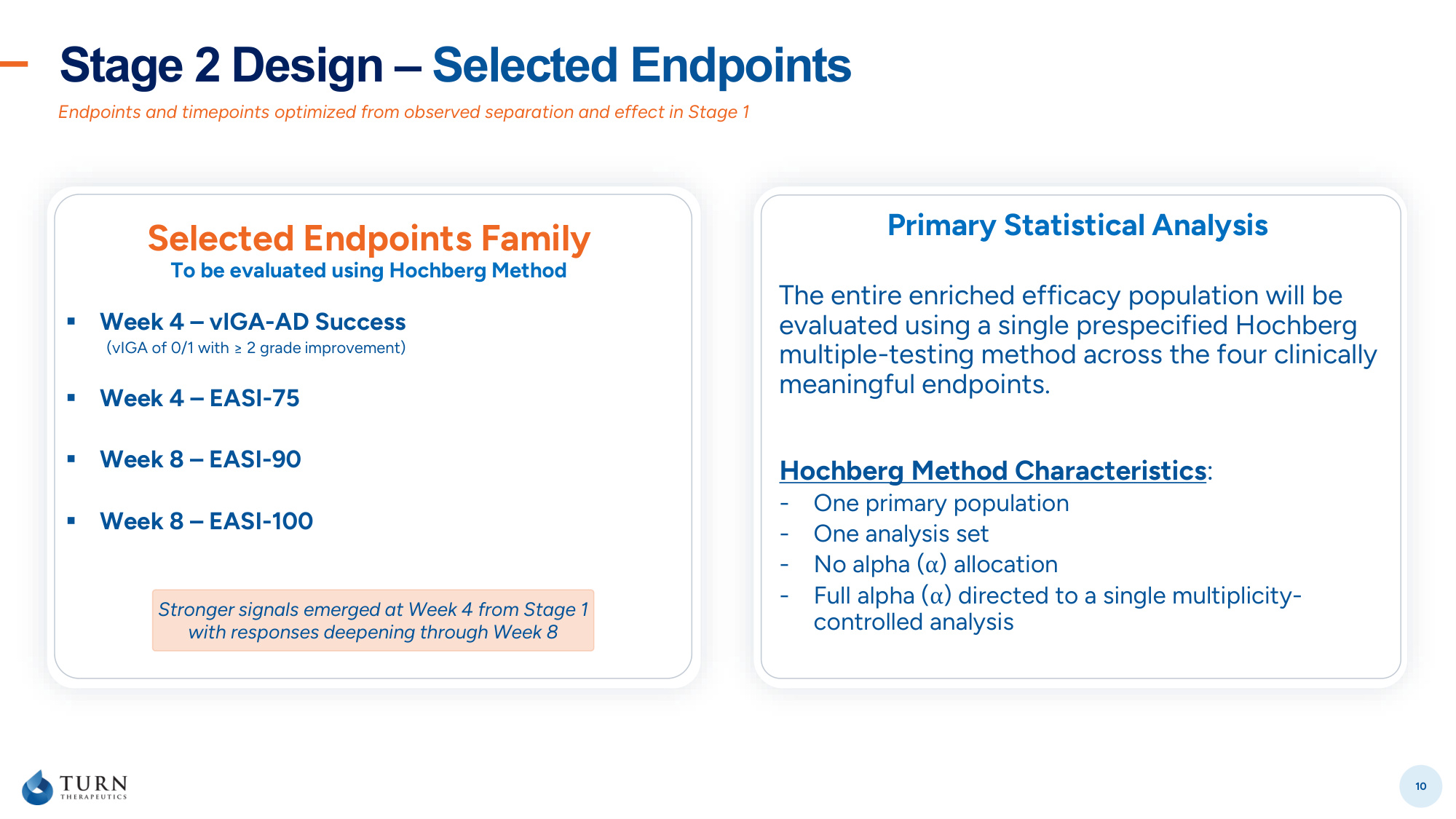
Stage 2 Design – Selected Endpoints 10 Endpoints and timepoints optimized from observed separation and effect in Stage 1 Selected Endpoints Family To be evaluated using Hochberg Method ▪ Week 4 – vIGA-AD Success (vIGA of 0/1 with ≥ 2 grade improvement) ▪ Week 4 – EASI-75 ▪ Week 8 – EASI-90 ▪ Week 8 – EASI-100 Primary Statistical Analysis The entire enriched efficacy population will be evaluated using a single prespecified Hochberg multiple-testing method across the four clinically meaningful endpoints. Stronger signals emerged at Week 4 from Stage 1 with responses deepening through Week 8 Hochberg Method Characteristics: - One primary population - One analysis set - No alpha (α) allocation - Full alpha (α) directed to a single multiplicity- controlled analysis
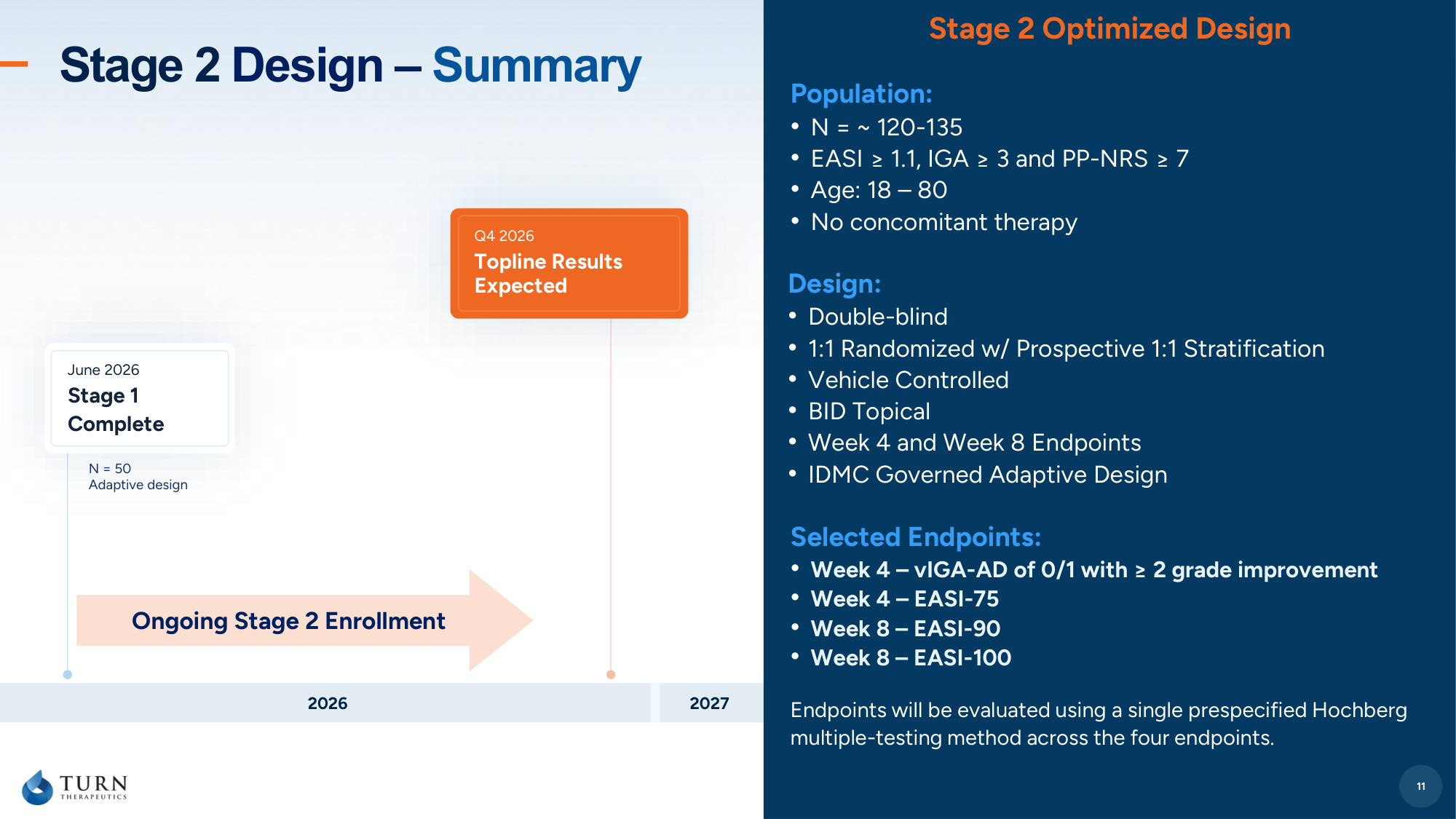
11 Stage 2 Design – Summary Design: • Double-blind • 1:1 Randomized w/ Prospective 1:1 Stratification • Vehicle Controlled • BID Topical • Week 4 and Week 8 Endpoints • IDMC Governed Adaptive Design 11 Stage 2 Optimized Design Selected Endpoints: • Week 4 – vIGA-AD of 0/1 with ≥ 2 grade improvement • Week 4 – EASI-75 • Week 8 – EASI-90 • Week 8 – EASI-100 Endpoints will be evaluated using a single prespecified Hochberg multiple-testing method across the four endpoints. Population: • N = ~ 120-135 • EASI ≥ 1.1, IGA ≥ 3 and PP-NRS ≥ 7 • Age: 18 – 80 • No concomitant therapy 2026 2027 June 2026 Stage 1 Complete Q4 2026 Topline Results Expected N = 50 Adaptive design Ongoing Stage 2 Enrollment
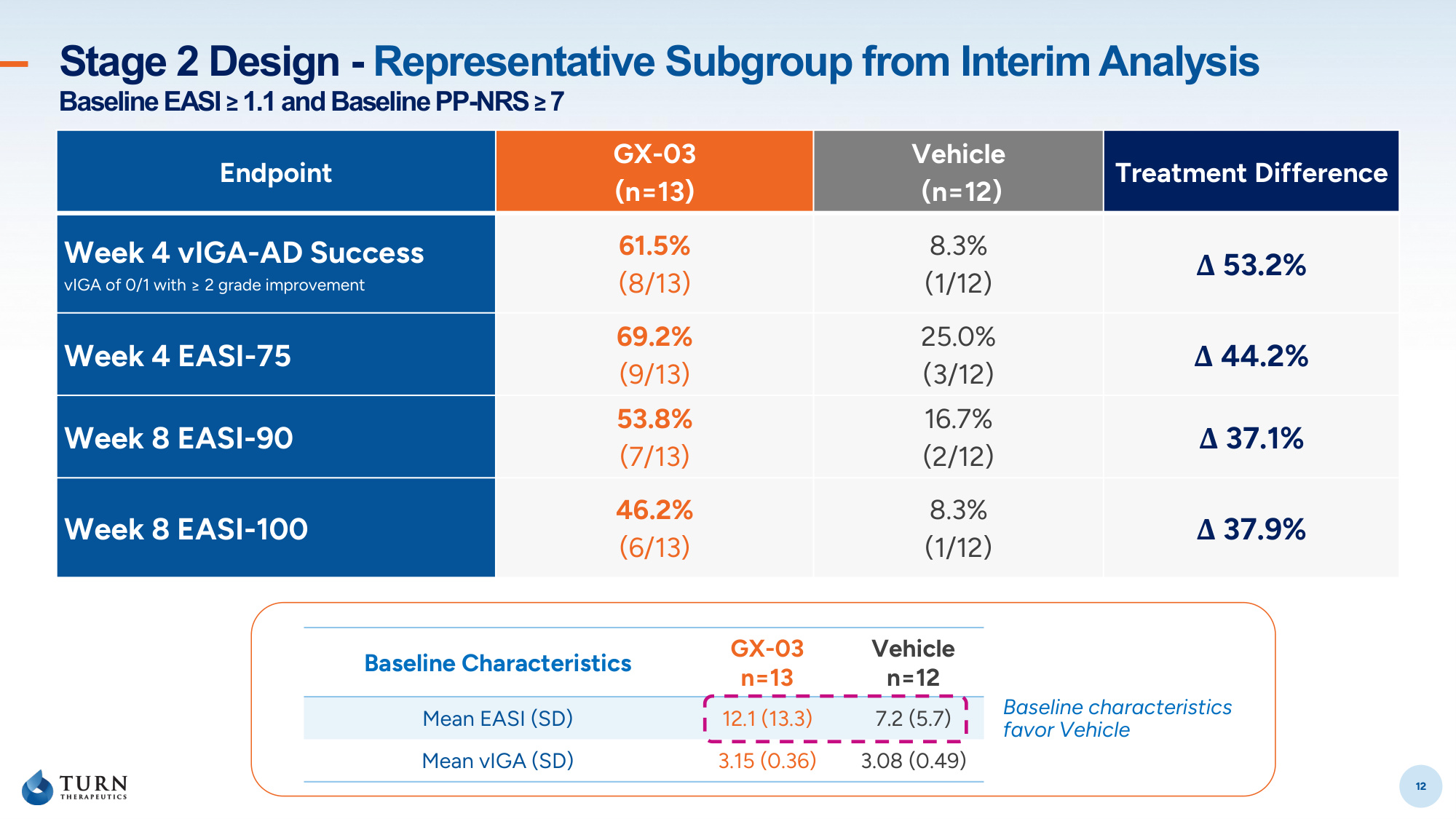
12 Stage 2 Design - Representative Subgroup from Interim Analysis Baseline EASI ≥ 1.1 and Baseline PP-NRS ≥ 7 12 Endpoint GX-03 (n=13) Vehicle (n=12) Treatment Difference Week 4 vIGA-AD Success vIGA of 0/1 with ≥ 2 grade improvement 61.5% (8/13) 8.3% (1/12) Δ 53.2% Week 4 EASI-75 69.2% (9/13) 25.0% (3/12) Δ 44.2% Week 8 EASI-90 53.8% (7/13) 16.7% (2/12) Δ 37.1% Week 8 EASI-100 46.2% (6/13) 8.3% (1/12) Δ 37.9% Baseline Characteristics GX-03 n=13 Vehicle n=12 Mean EASI (SD) 12.1 (13.3) 7.2 (5.7) Mean vIGA (SD) 3.15 (0.36) 3.08 (0.49) Baseline characteristics favor Vehicle
13 Dr. Stephen Hahn Clinical and Regulatory Lead
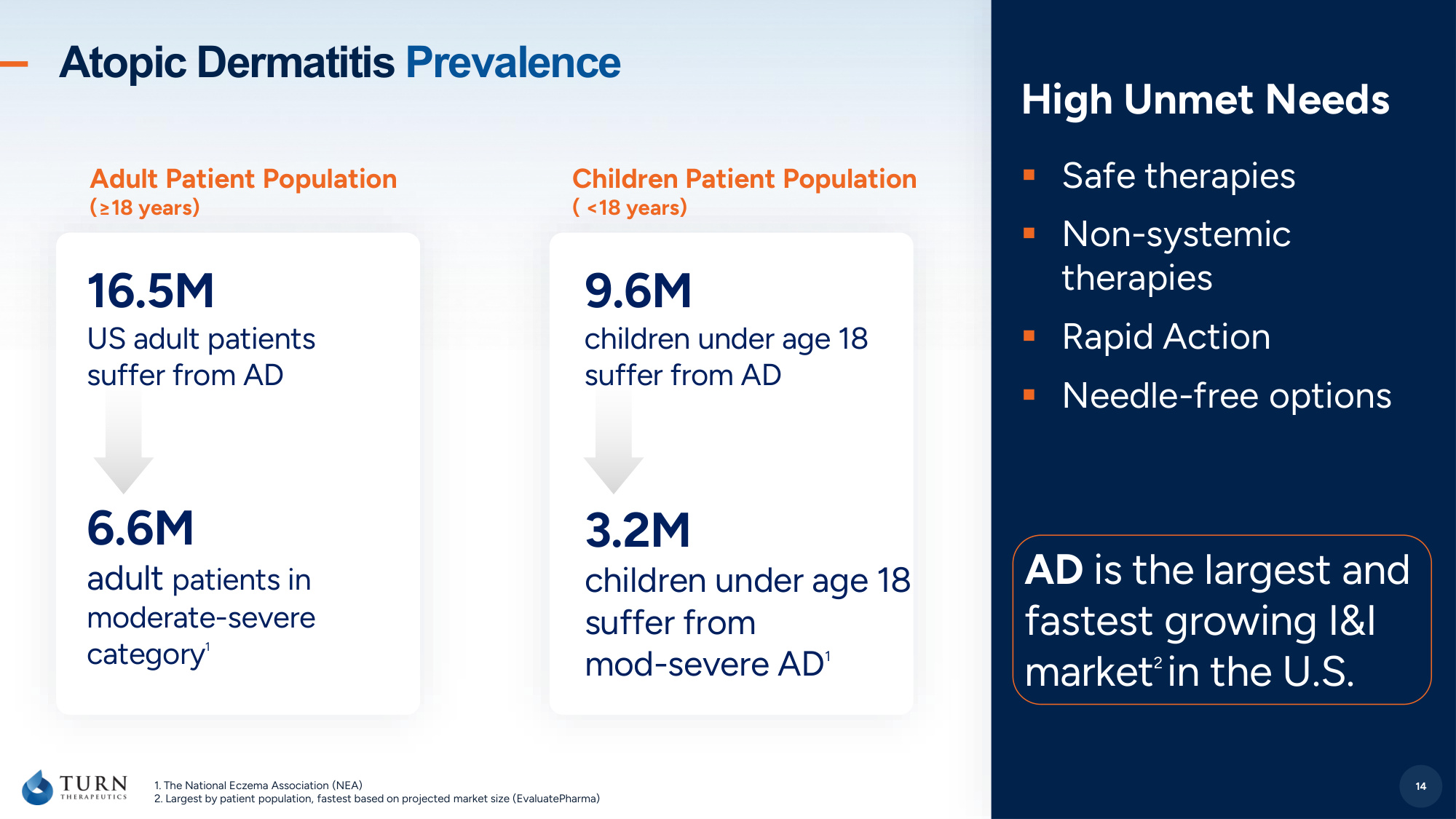
14 1. The National Eczema Association (NEA) 2. Largest by patient population, fastest based on projected market size (EvaluatePharma) 16.5M US adult patients suffer from AD 6.6M adult patients in moderate-severe category 1 High Unmet Needs ▪Safe therapies ▪Non-systemic therapies ▪Rapid Action ▪Needle-free options Atopic Dermatitis Prevalence 14 9.6M children under age 18 suffer from AD 3.2M children under age 18 suffer from mod-severe AD 1 AD is the largest and fastest growing I&I market 2 in the U.S. Adult Patient Population (≥18 years) Children Patient Population ( <18 years)
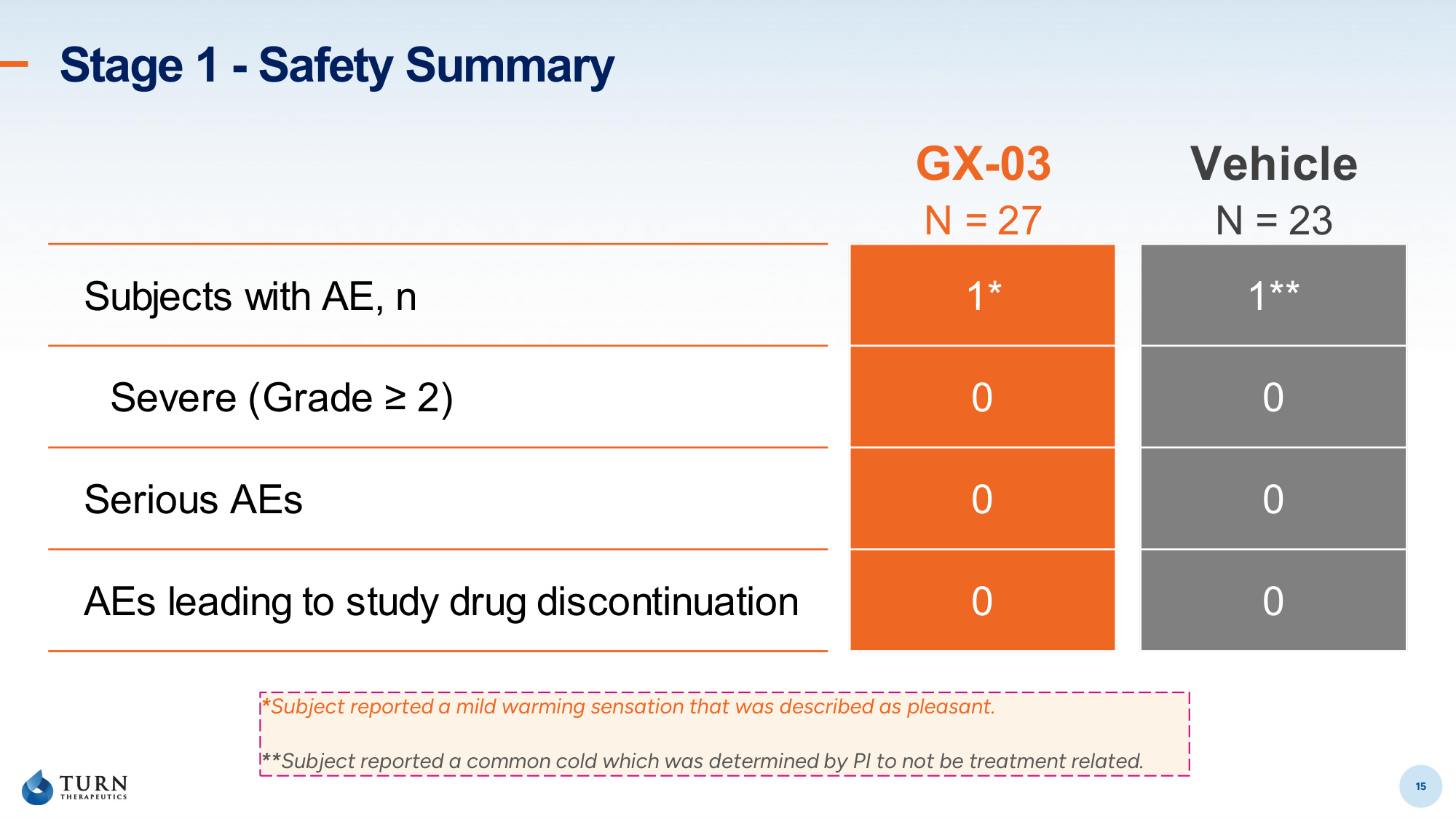
15 Stage 1 - Safety Summary 15 *Subject reported a mild warming sensation that was described as pleasant. **Subject reported a common cold which was determined by PI to not be treatment related. GX-03 Vehicle N = 27 N = 23 Subjects with AE, n 1* 1** Severe (Grade ≥ 2) 0 0 Serious AEs 0 0 AEs leading to study drug discontinuation 0 0
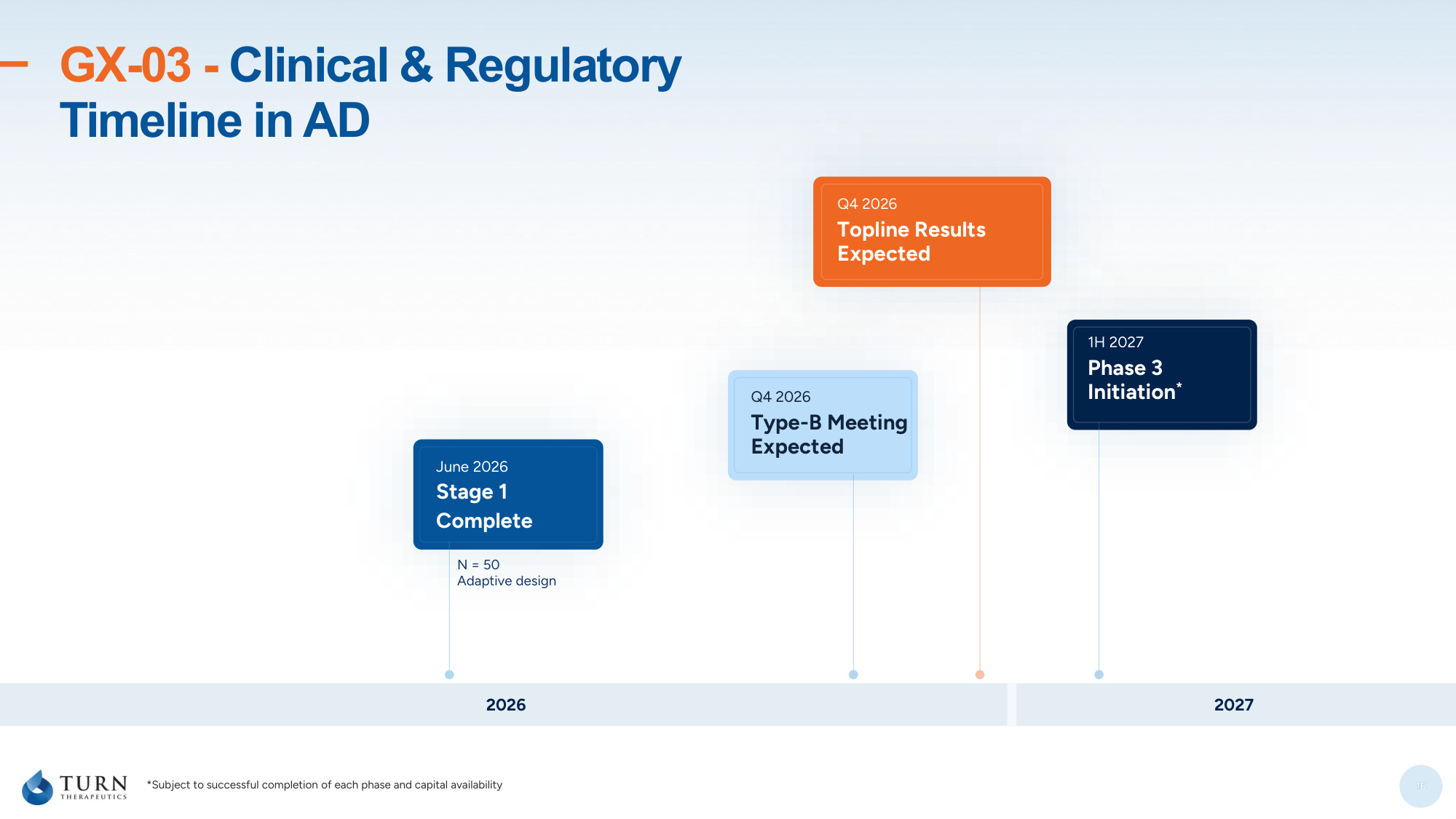
16 GX-03 - Clinical & Regulatory Timeline in AD 16 2026 2027 June 2026 Stage 1 Complete Q4 2026 Topline Results Expected N = 50 Adaptive design Q4 2026 Type-B Meeting Expected 1H 2027 Phase 3 Initiation* *Subject to successful completion of each phase and capital availability
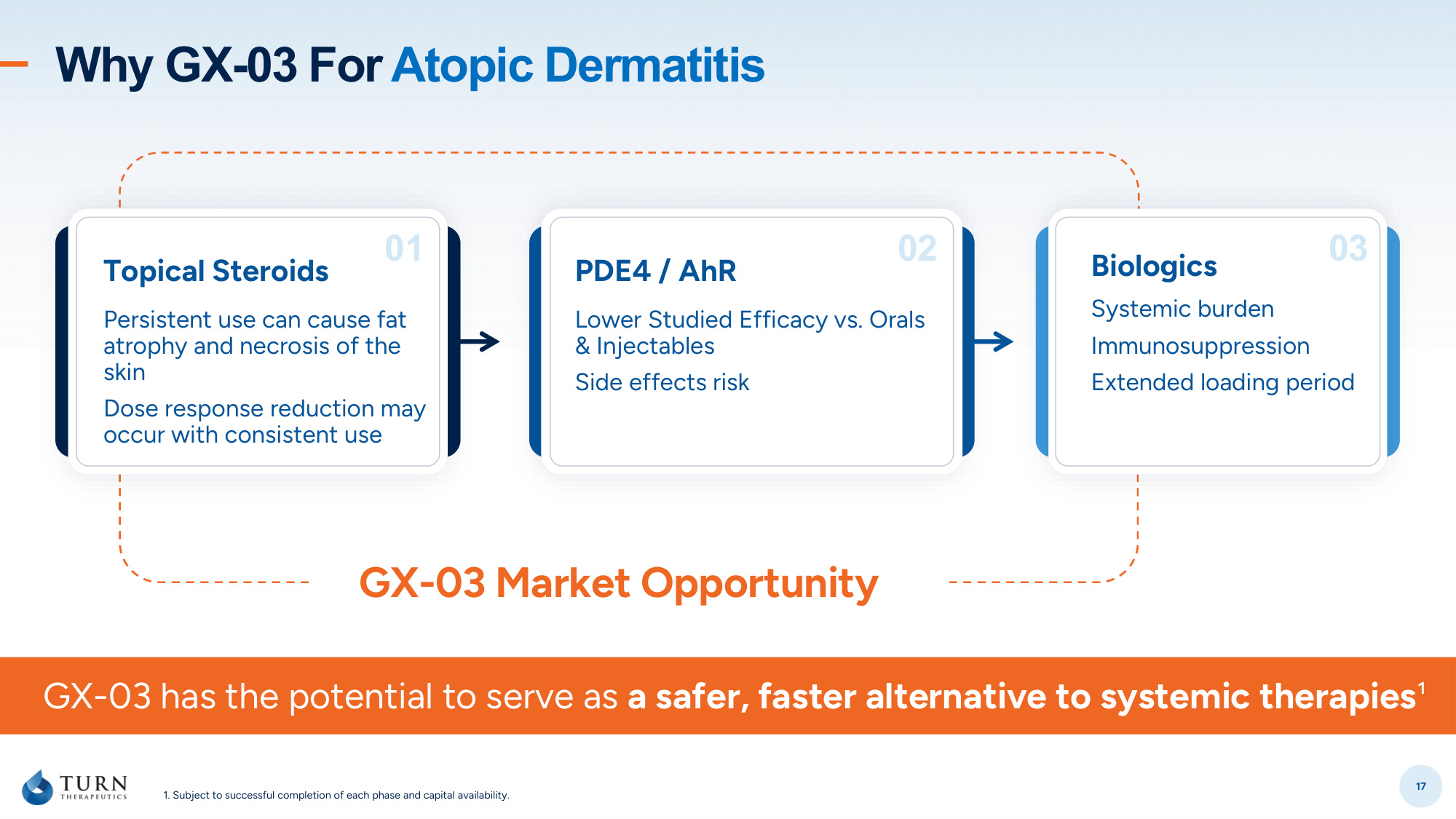
17 GX-03 Market Opportunity 1. Subject to successful completion of each phase and capital availability. Why GX-03 For Atopic Dermatitis 02 03 PDE4 / AhR Lower Studied Efficacy vs. Orals & Injectables Side effects risk Biologics Systemic burden Immunosuppression Extended loading period 01 Topical Steroids Persistent use can cause fat atrophy and necrosis of the skin Dose response reduction may occur with consistent use GX-03 has the potential to serve as a safer, faster alternative to systemic therapies¹

Investors@turntherapeutics.com 250 N. Westlake Blvd, #210 Westlake Village, CA 91362 Thank You!
19 Appendix
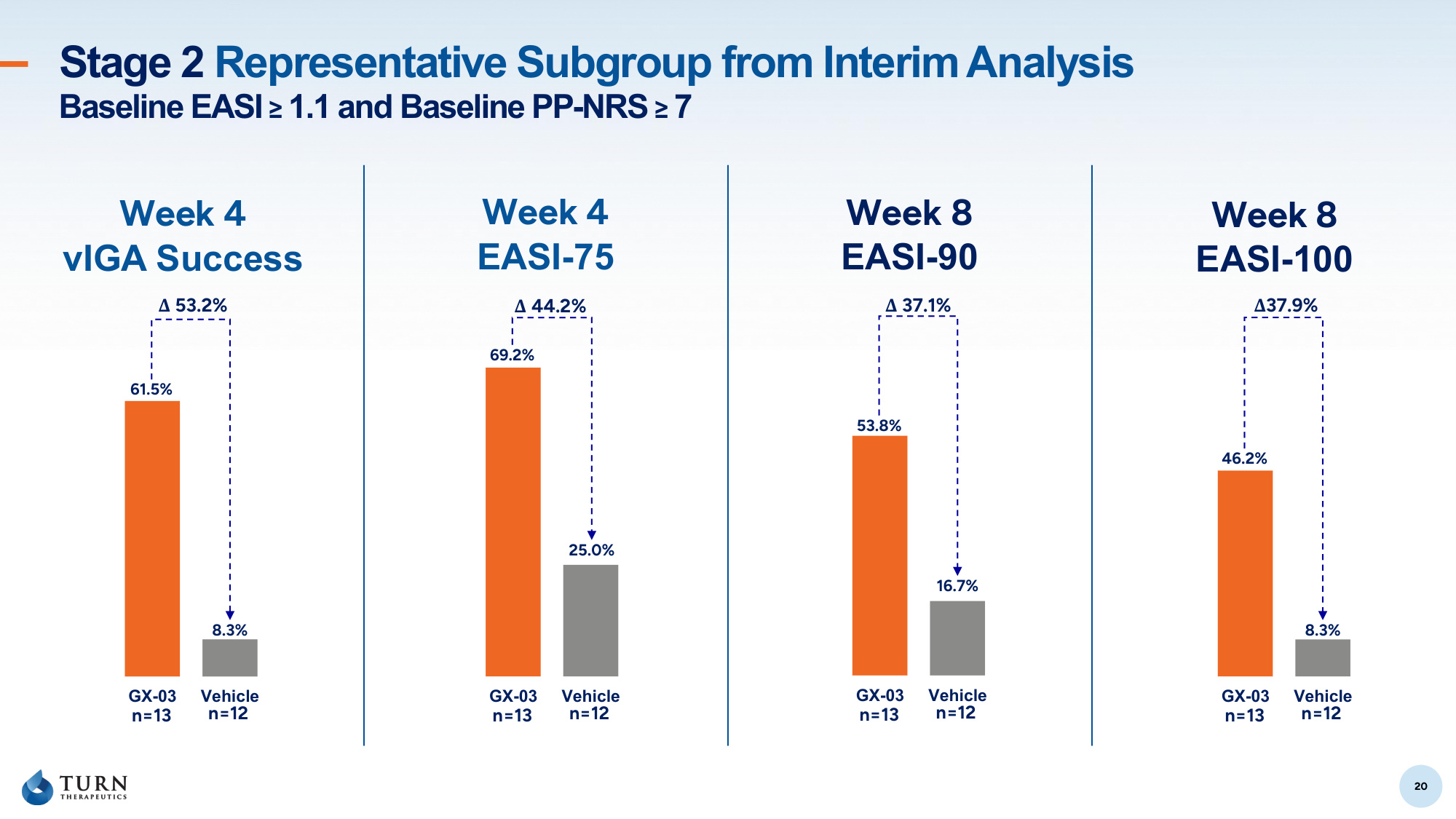
20 Stage 2 Representative Subgroup from Interim Analysis Baseline EASI ≥ 1.1 and Baseline PP-NRS ≥ 7 20 GX-03 Vehicle n=13 n=12 8.3% 61.5% Δ 53.2% Week 4 vIGA Success Week 8 EASI-90 Week 8 EASI-100 Week 4 EASI-75 GX-03 Vehicle n=13 n=12 25.0% 69.2% Δ 44.2% GX-03 Vehicle n=13 n=12 16.7% 53.8% Δ 37.1% GX-03 Vehicle n=13 n=12 8.3% 46.2% Δ37.9%
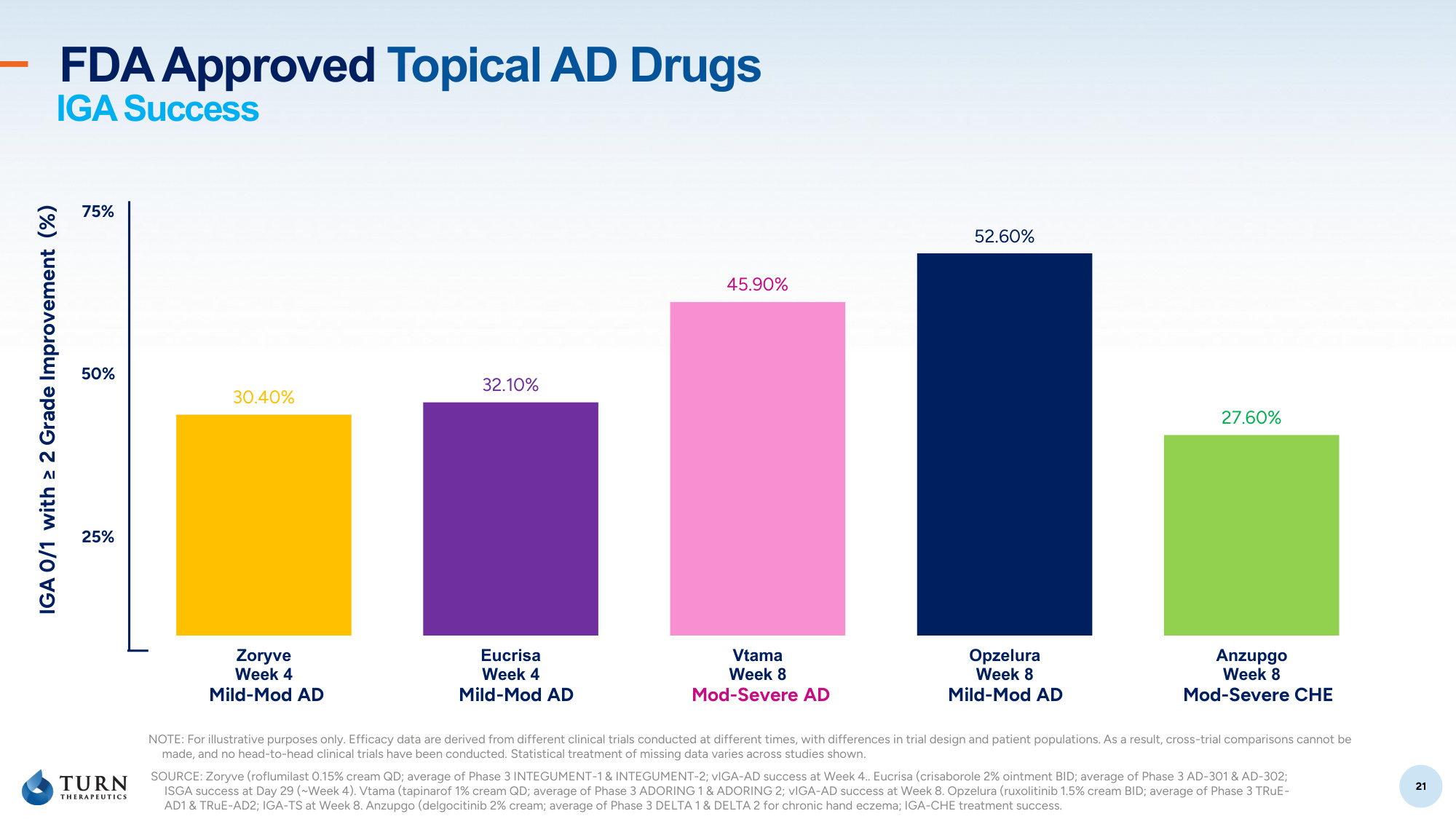
21 21 30.40% 32.10% 45.90% 52.60% 27.60% Zoryve Week 4 Eucrisa Week 4 Vtama Week 8 Opzelura Week 8 Anzupgo Week 8 FDA Approved Topical AD Drugs 25% 50% 75% IGA 0/1 with ≥ 2 Grade Improvement (%) SOURCE: Zoryve (roflumilast 0.15% cream QD; average of Phase 3 INTEGUMENT-1 & INTEGUMENT-2; vIGA-AD success at Week 4.. Eucrisa (crisaborole 2% ointment BID; average of Phase 3 AD-301 & AD-302; ISGA success at Day 29 (~Week 4). Vtama (tapinarof 1% cream QD; average of Phase 3 ADORING 1 & ADORING 2; vIGA-AD success at Week 8. Opzelura (ruxolitinib 1.5% cream BID; average of Phase 3 TRuE- AD1 & TRuE-AD2; IGA-TS at Week 8. Anzupgo (delgocitinib 2% cream; average of Phase 3 DELTA 1 & DELTA 2 for chronic hand eczema; IGA-CHE treatment success. Mild-Mod AD Mild-Mod AD Mod-Severe AD Mild-Mod AD Mod-Severe CHE IGA Success NOTE: For illustrative purposes only. Efficacy data are derived from different clinical trials conducted at different times, with differences in trial design and patient populations. As a result, cross-trial comparisons cannot be made, and no head-to-head clinical trials have been conducted. Statistical treatment of missing data varies across studies shown.
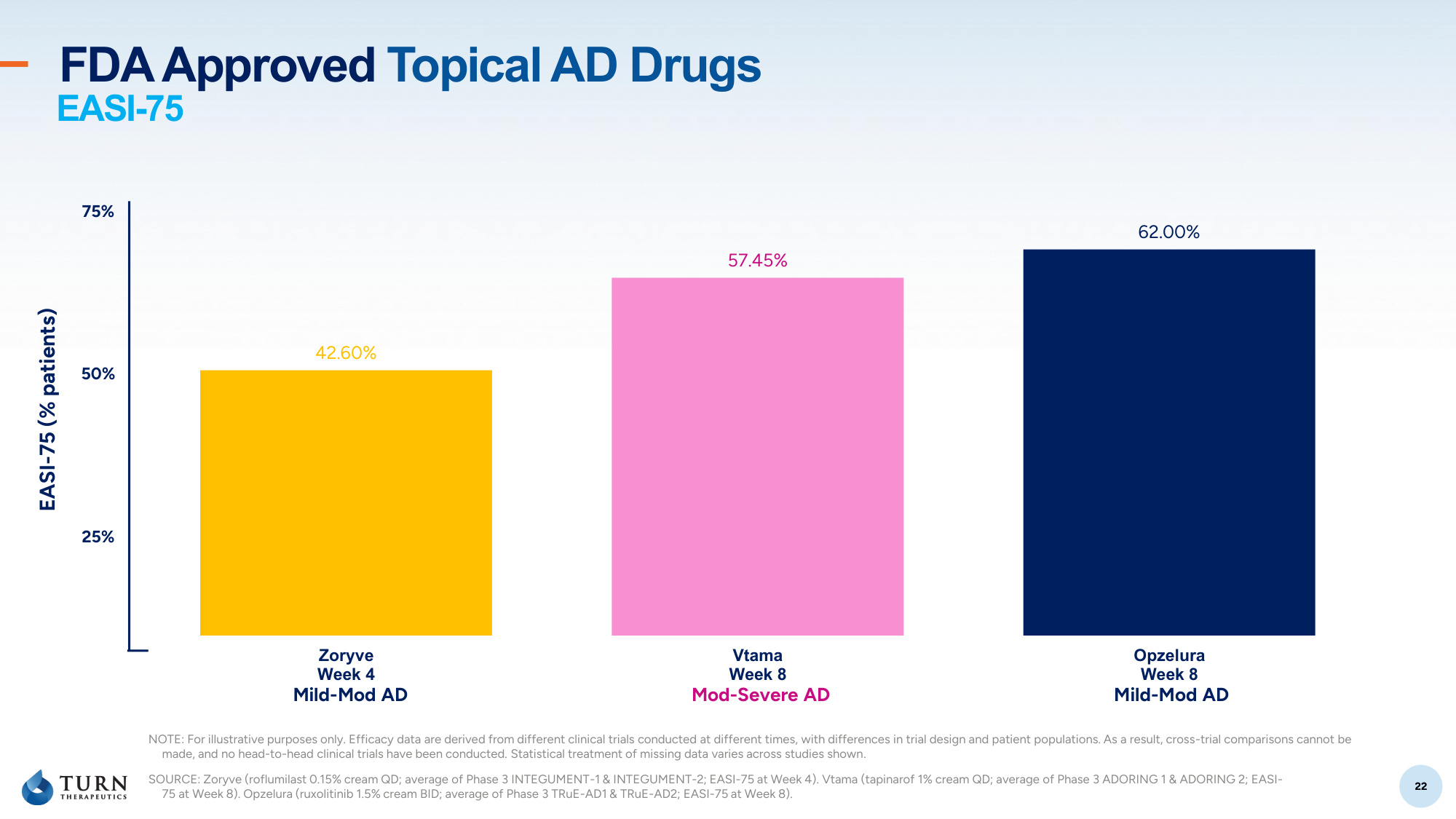
22 22 42.60% 57.45% 62.00% Zoryve Week 4 Vtama Week 8 Opzelura Week 8 FDA Approved Topical AD Drugs 25% 50% 75% EASI-75 (% patients) SOURCE: Zoryve (roflumilast 0.15% cream QD; average of Phase 3 INTEGUMENT-1 & INTEGUMENT-2; EASI-75 at Week 4). Vtama (tapinarof 1% cream QD; average of Phase 3 ADORING 1 & ADORING 2; EASI- 75 at Week 8). Opzelura (ruxolitinib 1.5% cream BID; average of Phase 3 TRuE-AD1 & TRuE-AD2; EASI-75 at Week 8). Mild-Mod AD Mod-Severe AD Mild-Mod AD EASI-75 NOTE: For illustrative purposes only. Efficacy data are derived from different clinical trials conducted at different times, with differences in trial design and patient populations. As a result, cross-trial comparisons cannot be made, and no head-to-head clinical trials have been conducted. Statistical treatment of missing data varies across studies shown.
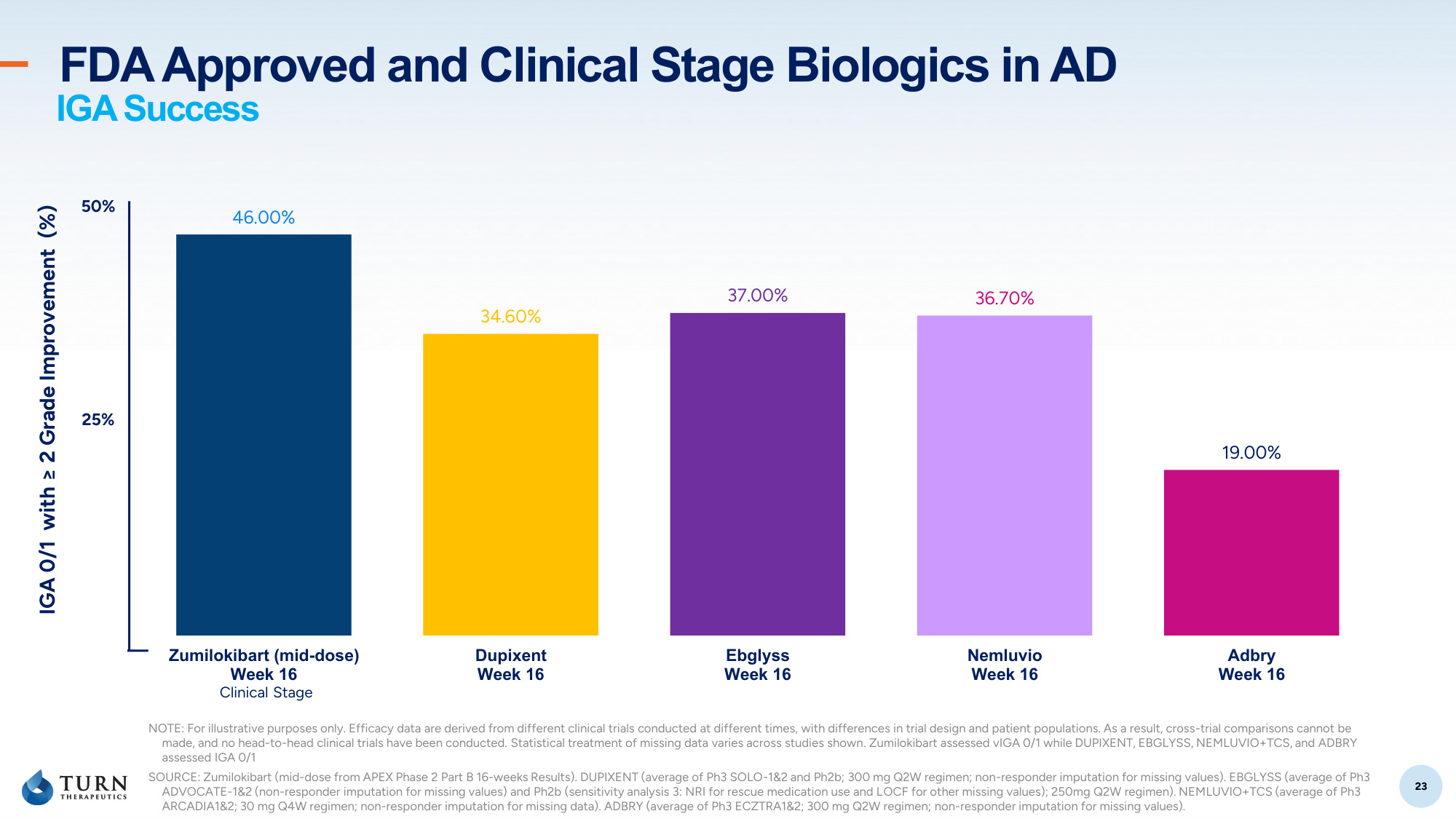
23 23 46.00% 34.60% 37.00% 36.70% 19.00% Zumilokibart (mid-dose) Week 16 Dupixent Week 16 Ebglyss Week 16 Nemluvio Week 16 Adbry Week 16 FDA Approved and Clinical Stage Biologics in AD 25% 50% IGA 0/1 with ≥ 2 Grade Improvement (%) SOURCE: Zumilokibart (mid-dose from APEX Phase 2 Part B 16-weeks Results). DUPIXENT (average of Ph3 SOLO-1&2 and Ph2b; 300 mg Q2W regimen; non-responder imputation for missing values). EBGLYSS (average of Ph3 ADVOCATE-1&2 (non-responder imputation for missing values) and Ph2b (sensitivity analysis 3: NRI for rescue medication use and LOCF for other missing values); 250mg Q2W regimen). NEMLUVIO+TCS (average of Ph3 ARCADIA1 30 mg Q4W regimen; non-responder imputation for missing data). ADBRY (average of Ph3 ECZTRA1 300 mg Q2W regimen; non-responder imputation for missing values). Clinical Stage IGA Success NOTE: For illustrative purposes only. Efficacy data are derived from different clinical trials conducted at different times, with differences in trial design and patient populations. As a result, cross-trial comparisons cannot be made, and no head-to-head clinical trials have been conducted. Statistical treatment of missing data varies across studies shown. Zumilokibart assessed vIGA 0/1 while DUPIXENT, EBGLYSS, NEMLUVIO+TCS, and ADBRY assessed IGA 0/1
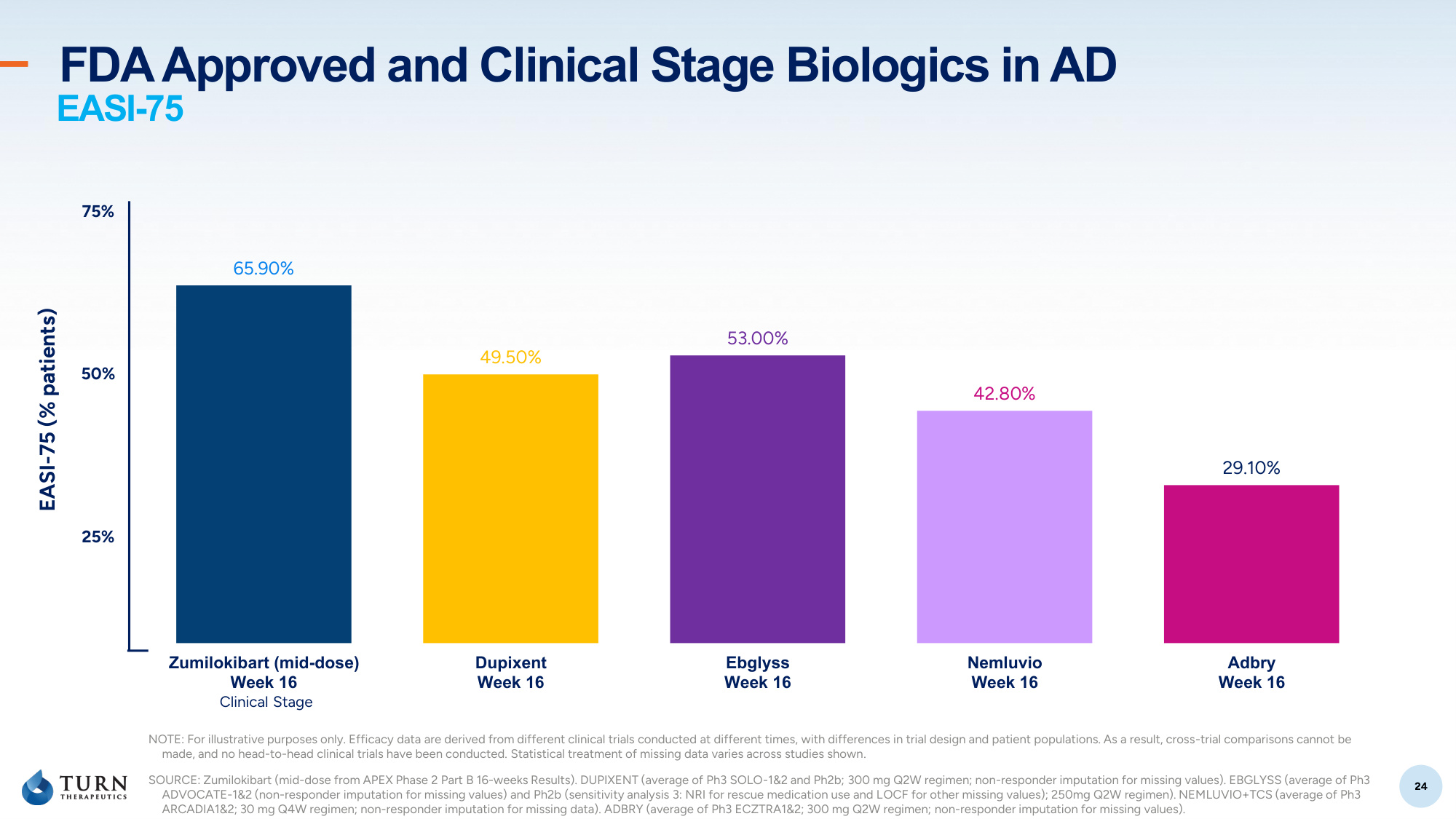
24 24 65.90% 49.50% 53.00% 42.80% 29.10% Zumilokibart (mid-dose) Week 16 Dupixent Week 16 Ebglyss Week 16 Nemluvio Week 16 Adbry Week 16 25% 50% 75% EASI-75 (% patients) SOURCE: Zumilokibart (mid-dose from APEX Phase 2 Part B 16-weeks Results). DUPIXENT (average of Ph3 SOLO-1&2 and Ph2b; 300 mg Q2W regimen; non-responder imputation for missing values). EBGLYSS (average of Ph3 ADVOCATE-1&2 (non-responder imputation for missing values) and Ph2b (sensitivity analysis 3: NRI for rescue medication use and LOCF for other missing values); 250mg Q2W regimen). NEMLUVIO+TCS (average of Ph3 ARCADIA1 30 mg Q4W regimen; non-responder imputation for missing data). ADBRY (average of Ph3 ECZTRA1 300 mg Q2W regimen; non-responder imputation for missing values). Clinical Stage EASI-75 NOTE: For illustrative purposes only. Efficacy data are derived from different clinical trials conducted at different times, with differences in trial design and patient populations. As a result, cross-trial comparisons cannot be made, and no head-to-head clinical trials have been conducted. Statistical treatment of missing data varies across studies shown. FDA Approved and Clinical Stage Biologics in AD
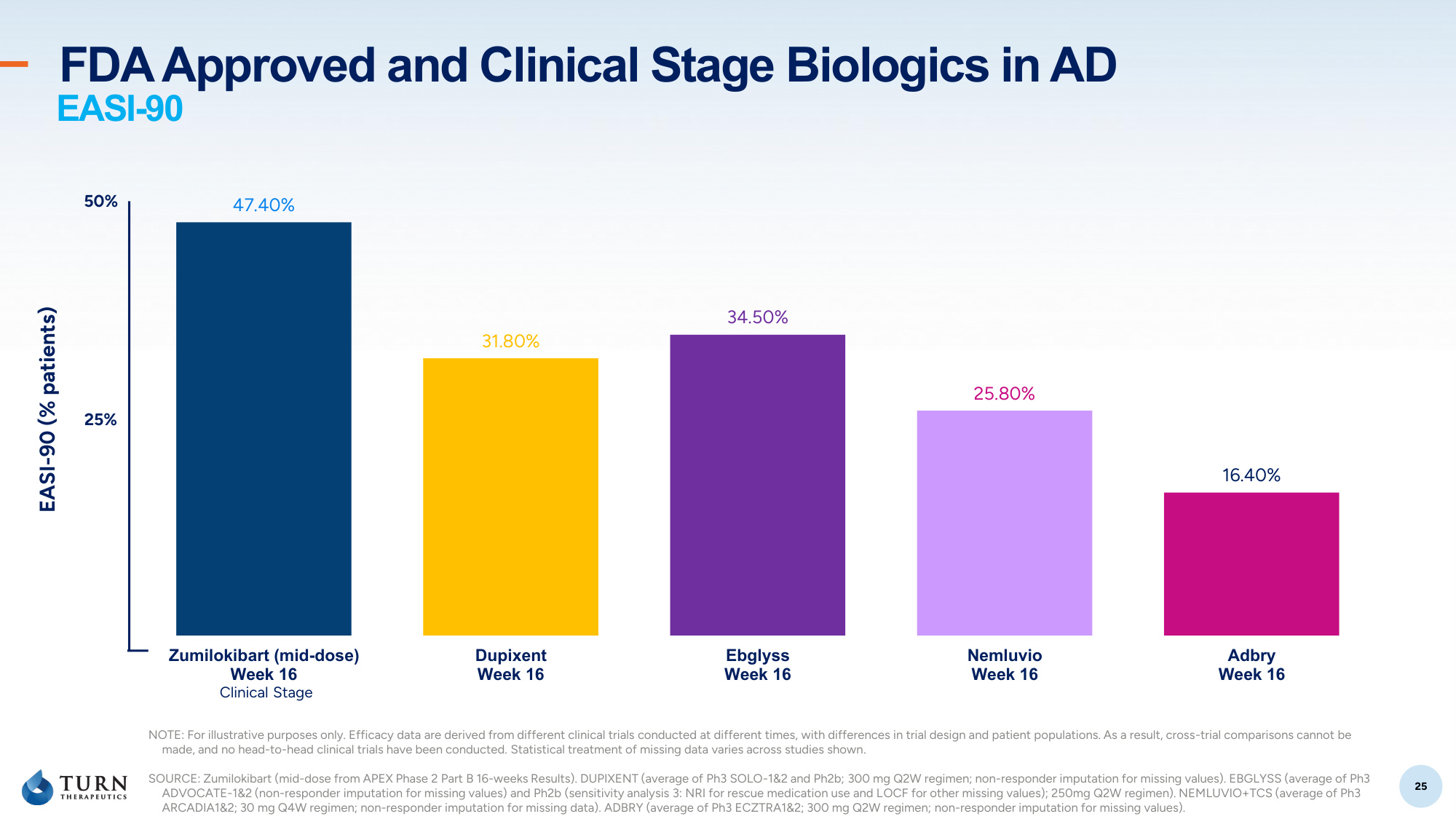
25 25 47.40% 31.80% 34.50% 25.80% 16.40% Zumilokibart (mid-dose) Week 16 Dupixent Week 16 Ebglyss Week 16 Nemluvio Week 16 Adbry Week 16 25% 50% EASI-90 (% patients) SOURCE: Zumilokibart (mid-dose from APEX Phase 2 Part B 16-weeks Results). DUPIXENT (average of Ph3 SOLO-1&2 and Ph2b; 300 mg Q2W regimen; non-responder imputation for missing values). EBGLYSS (average of Ph3 ADVOCATE-1&2 (non-responder imputation for missing values) and Ph2b (sensitivity analysis 3: NRI for rescue medication use and LOCF for other missing values); 250mg Q2W regimen). NEMLUVIO+TCS (average of Ph3 ARCADIA1 30 mg Q4W regimen; non-responder imputation for missing data). ADBRY (average of Ph3 ECZTRA1 300 mg Q2W regimen; non-responder imputation for missing values). Clinical Stage EASI-90 NOTE: For illustrative purposes only. Efficacy data are derived from different clinical trials conducted at different times, with differences in trial design and patient populations. As a result, cross-trial comparisons cannot be made, and no head-to-head clinical trials have been conducted. Statistical treatment of missing data varies across studies shown. FDA Approved and Clinical Stage Biologics in AD